The post The Ultimate Bread Baking Guide appeared first on Taste of Home.
]]>Week 1: Bread Dough Basics
Good bread starts with good bread dough. We’ll walk you through how to proof yeast, knead dough and proof dough. To step up your bread game, we’ll show you how to score bread to create picture-perfect loaves. Finally, we’ll teach you how to tell when bread is done so you know when to pull it out of the oven. You got this!


Week 2: Bread Pans
Bread comes in all shapes and sizes. Learn how to make bread in a loaf pan, a round pan, a Dutch oven and a cast-iron skillet. Even no pan at all! (Well, actually, you’ll make it free-form on a sheet pan.)


Week 3: Shaping Bread
Now that you’ve developed your bread dough skills, it’s time to have fun shaping it into different forms. From braids to knots to pumpkins (cute!), these are our favorite ways to shape bread dough.


Week 4

The post The Ultimate Bread Baking Guide appeared first on Taste of Home.
]]>The post How to Prevent Soggy Pie Crust appeared first on Taste of Home.
]]>
Pick the Right Pan
It all starts with the pie pan. Choose a glass pie plate or metal pie plate with a dull finish (vintage pie pans are a great option). Glass heats up gradually and allows your crust to bake evenly. Plus, its transparent material makes it easy to keep an eye on your crust so you can remove it once it’s golden and crispy. Just don’t forget to grease your glass pie dish before using it.
Metal heats up quickly and allows your crust to bake evenly, although it’s a bit more difficult to keep track of your crust’s progress since you can’t see through the pan. Since aluminum transfers heat the quickest of any other pie pan, we suggest using an aluminum pan to achieve the golden-brown color you want.

Blind Bake Your Crust
Blind baking is a technique that requires partially or fully baking a pie crust before adding any filling. This helps your crust bake evenly and helps you avoid soggy-bottom pies.
First, place the dough in a pie plate and flute the edges. Line the unpricked shell with a double thickness of heavy-duty aluminum foil. If desired, fill it with dried beans, uncooked rice or pie weights. The weight will keep the crust from puffing up, shrinking or slipping as it cooks. Bake the crust at 450°F for eight minutes. Remove the foil and bake for 5 to 6 minutes longer or until the crust is dry and crisp. Cool on a wire rack, then remove the beans.
Test Kitchen Tip: Wondering which fat to use in your pie crust? We tested butter, shortening and lard to see which works best. We found that the best fat to use for a flaky, delicious pie crust is butter.

Use an Egg Wash
Once you’ve prebaked your pie crust, brush the bottom and sides of the crust with egg wash, then reheat it at 400° for four minutes to set the glaze. This creates a seal between the crust and the filling so that your crust stays crispy and golden after the filling is added.

Add an Extra Filler
This step is optional. Once you’ve prebaked your crust and brushed it with egg wash, consider adding a dry ingredient—such as cornflakes or breadcrumbs—that acts as a barrier between the crust and the pie filling. No matter what kind of pie you’re baking, this extra filler will prevent the gooey pie filling from making the crust soggy.

Cut Slits in the Top Crust
For double-crust fruit pies, cut slits in the top crust to allow steam to escape. This will prevent moisture from building up in your pie and creating a soggy crust. Plus, there are lots of ways to make decorative pie crusts that allow for this moisture to ventilate.
It’s also worth using a pie bird. Pie birds have a hollow center that steam can escape through for optimal ventilation. If you want to bake pie just like Grandma, a pie bird is the way to go!

Bake on a Baking Sheet
Line a metal baking sheet with parchment paper and bake your pie on it. Metal sheet pans will absorb heat and transfer it to the bottom of the pie, ensuring even browning. Plus, the parchment paper will catch any pie filling that spills, preventing a gooey mess on the floor of your oven.
Lastly, bake your pie on the lowest rack in your oven. The heat will transfer to the bottom of the pie quicker than the top of the pie, crisping the bottom crust while the top browns more slowly.
The post How to Prevent Soggy Pie Crust appeared first on Taste of Home.
]]>The post This 6 Cent Egg Replacement Is All I Use for Baking—and I’ll Never Go Back appeared first on Taste of Home.
]]>But I’m here to tell you a secret: I’m allergic to eggs, so I never use them! Does that mean I feel a little smug now, as egg prices soar and I maintain an egg-free kitchen? Sure! But that also means that I have the expertise to share with all of you during this egg crisis.
I use a common egg substitute for baking, and it is a life-saver.
What is the magical egg replacement?
I’m talking about a “flax egg.” This is an egg substitute that vegans and people with egg allergies have used for a long time. You mix flaxseed with water to get an “eggy” texture, then use it as you would an egg in any baking recipe.
Flaxseed is a handy egg substitute because it’s shelf-stable and extremely cheap. You can buy a bag of ground flaxseed at pretty much any grocery store. It will probably be in the baking aisle. I buy mine at Aldi, where it retails for $3.85 a bag. Each bag of Aldi’s flaxseed contains 60 tablespoons, which is equivalent to 60 eggs. Therefore, each flax egg costs about six cents. It’s amazingly budget-friendly!
How do you bake with a flax egg?
It’s simple math, which isn’t always the case with substitutes. For each egg you want to replace, combine 1 tablespoon of ground flaxseed with 3 tablespoons of water and let it sit for about five minutes. If you’re making a recipe that calls for two eggs, then you would use 2 tablespoons of flaxseed and 6 tablespoons of water. (Don’t replace more than two eggs with flax in a recipe, though.)
Once it’s mixed with water, the flaxseed becomes slightly gelatinous, and the texture is reminiscent of a freshly cracked egg. If you’ve ever made chia seed pudding before, it’s a similar process.
I should note that while this is great for baking, it’s not something to use if you’re going to make an omelet or scrambled eggs. If you want to forgo eggs completely until prices drop, use an egg substitute like Just Egg or make a tofu scramble. But if you simply want to cut down on grocery costs while egg prices surge, prioritize real eggs for your breakfast sandwiches and brunch, and stick to a flax egg for baking. Your wallet will thank you!
The post This 6 Cent Egg Replacement Is All I Use for Baking—and I’ll Never Go Back appeared first on Taste of Home.
]]>The post This Is the Best Cheese for Pizza, According to a Pizza Chef appeared first on Taste of Home.
]]>Because the company was located in the town of Cabot, home of the Cabot Creamery, and not far from Vermont Creamery and Jasper Hill Farm, we had lots of local cheeses at our fingertips. (You can have good local cheese, too, if you head to one of the best cheese shops in the country.)
I’m excited to share some classic and surprising cheeses that you’ll want to try on your homemade pizza. You can even use them to make some of our easy pizza recipes.
What is important when choosing a pizza cheese?
- Meltiness: One of the pleasures of pizza is hot, gooey melted cheese. Generally, this is a quality of young, fresh cheeses that haven’t been aged for long or at all. Younger cheeses are higher in moisture than older cheeses, and the right amount of moisture leads to the best melting cheeses.
- Stretchiness: Some of the nicest melting cheeses are also the stretchiest cheeses. This is particularly true of mozzarella, which is pulled like taffy when it’s being made. Stretchy cheeses form that incredible cheese pull when you lift a slice from the rest of the pie.
- Flavor: Unless you’re making a plain cheese pizza, you’ll want to make sure that the flavor of the cheeses you choose pair well with other ingredients. Would your chosen pizza toppings go well together in another context? If so, they’ll probably make an incredible pizza.
- Rinds and veins: Some cheeses are inoculated with bacteria, yeasts and molds, which cause them to develop additional flavors and characteristics as they age. These processes create complexity that wouldn’t occur naturally, and some bloomy rind and blue cheeses make exceptional pizza toppings.
- Age: Because melty, stretchy cheeses are usually young, they generally aren’t particularly complex in flavor—that’s a quality that typically comes with age. To get the best of both worlds, top pizzas with a combination of a fresher cheese and an intensely flavored older cheese.
- Layering: If you’re using a melting cheese, plan to use a good amount of it. Put it on top of delicate ingredients that might burn at high oven temps. Place ingredients that can handle some browning, such as sausage or pepperoni, or extra moist ingredients, atop that cheese layer. If you’re adding small amounts of fancier cheese in addition, that can be sprinkled on last.
What cheese is best for pizza?
Mozzarella
The king of the stretchy and melty cheeses, mozzarella is a must for many varieties of pizza. Choose low-moisture mozz as your all-purpose pizza sprinkle, and use fresh mozzarella sparingly atop specialty pies, such as the classic Italian Margherita pizza. Don’t know what to buy? Here are the best mozzarellas to use when cooking. And, while pre-shredded cheese makes life easier, do note that the additives that keep it from clumping in the package can inhibit some of its pizza-friendly qualities.
Cheddar
It’s not as stretchy as mozzarella, but cheddar is a great melting cheese, and sharp cheddars boast zingy flavor that’s great on a breakfast pizza or a pie with sweet ingredients—think caramelized onions, roasted winter squash cubes or apple slices. If you have a super-aged cheddar, such as a clothbound or cave-aged variation, consider using that as a secondary cheese sprinkled over a milder cheddar, mozzarella or Monterey Jack.
Chevre
The spreadable, tangy goat cheese is another great counterpoint to both sweet and savory pizza toppings. Consider using it alongside items with French or Mediterranean vibes, including salty cured meats, fresh herbs and lovely orchard fruits like peaches and plums.
Alpine-style cheese
These cheeses can be the best of both worlds for pizza making, as many of them are very meltable (they’re the starring players in fondue), and they tend to have amazing nutty flavors. Look for Gruyere, Raclette, Emmenthaler and Appenzeller.
Fancy blue cheese
Used sparingly, a pungent blue cheese can provide the perfect counterpoint to an elegant collection of pizza toppings. Imagine a combo of arugula, prosciutto, pear and a little bit of Gorgonzola, or consider a mix of wilted spinach, bacon and sliced cooked potato with just a hint of an American artisan blue cheese.
The post This Is the Best Cheese for Pizza, According to a Pizza Chef appeared first on Taste of Home.
]]>Ingredients
- 1 cup pecan halves
Directions
- To roast in the oven, preheat oven to 350°. Line pecans in a single layer on a 15x10x1-in. baking sheet. Roast 6-10 minutes or until golden brown, stirring often. Remove from oven; transfer to a cold plate.
Nutrition Facts
1/4 cup: 171 calories, 18g fat (2g saturated fat), 0 cholesterol, 0 sodium, 3g carbohydrate (1g sugars, 2g fiber), 2g protein.
The post 9 Mistakes You Might Be Making with Raw Chicken (and How to Avoid Them) appeared first on Taste of Home.
]]>
There’s a reason “tastes like chicken” is such a popular phrase. Most home cooks reach for boneless, skinless chicken breast for just about any meal. (We know because you’ve sent in thousands of chicken recipes!) Chicken is cheap, plentiful and pairs with nearly anything. But it’s important to remember to take heed when preparing this bird. Raw chicken can be harmful if it’s not handled with care. Cook your next chicken dinner safely by avoiding these common mistakes.

Leaving raw chicken out too long
Many cooks will put chicken out on the counter to thaw, then promptly forget about it. But it’s important to treat chicken as an item with a time stamp. At room temperature, meat can begin to develop harmful bacteria, which if consumed may result in various foodborne illnesses—aka food poisoning.
What to do instead:
Place chicken in the fridge immediately after you’ve finished shopping. Only take it out when you are prepared to cook. If the chicken is frozen, thaw it in the fridge up to two days before cooking. Read more about how to store raw chicken.

Not knowing when to toss raw chicken
Raw chicken is supposed to be pink and a little bit slippery—not slimy, smelly or turning gray. If it’s any of the above, it’s time to toss it. (Learn more about how to tell if chicken is bad.) Whether you brought it home from the grocery store recently or took it out of the freezer to thaw, raw chicken is really only supposed to sit in the refrigerator for one to two days before cooking.
What to do instead:
Shop intentionally, with a plan to cook chicken within two days if you don’t want to freeze it. Always check raw chicken for the correct color, texture and smell before you use it in a recipe.

Storing raw chicken improperly
Think your meat can stay on any shelf in the fridge? Think again. Chicken juice has a tendency to leak and drip outside of its container. This can be bad news (contamination) if it comes into contact with your produce.
What to do instead:
Place chicken on a plate, then cover and store on the bottom shelf of your refrigerator. Then, when it’s fully thawed, learn how to cut a whole chicken.

Rinsing chicken before you cook
Contrary to popular opinion, raw chicken doesn’t need to be (and shouldn’t be) rinsed in any way. Rinsing can cause bacteria on the chicken to splash and cling to surrounding surfaces, rather than eliminating them from the chicken. Find more food safety mistakes you might be making, and learn about more foods you should never wash before cooking.
What to do instead:
Skip washing the chicken, but make sure you pat-dry it first, like many professional chefs do. Then, send it straight to the frying pan….or oven…or slow cooker.

Marinating chicken improperly
Chicken tastes delicious with a zesty marinade. In fact, it’s one of the easiest ways to tenderize the meat. However, leaving raw chicken breasts or thighs on the counter to marinate can take your dinner from delicious to dangerous, as bacteria can grow better when it’s warm. And though it may seem thrifty, never reuse marinade after it’s come into contact with raw meat.
What to do instead:
Marinate your chicken in an airtight container in the refrigerator. Toss the juices when you’re done.

Reusing tools that have touched raw chicken
If you’re a savvy cook, you probably know a thing or two about multitasking. It’s a time-saver to bounce around the kitchen, stirring a skillet one moment and slicing vegetables the next. When it comes to handling chicken, however, cross-contamination can put you at risk for salmonella. Avoid using utensils, cookware, cutting boards and anything else after they’ve been exposed to raw chicken.
What to do instead:
Thoroughly wash items after they come into contact with the raw chicken.

Letting raw chicken touch other foods
For those who work in tiny kitchens, the cutting board can be priceless space. It may seem easy to chop the romaine lettuce for your salad on the same surface where you’ve cut your raw chicken into slices. Unfortunately, this is an easy way for chicken juice to seep into, and yes, contaminate your food. That’s why you should have at least two cutting boards!
What to do instead:
Avoid placing raw chicken near ingredients that aren’t being cooked. Gain back some workspace with these genius kitchen organizing ideas.

Forgetting to wash your hands
Your hands are often the best tool when it comes to breading and seasoning your protein. But be careful; once they come in contact with chicken juice, they can quickly cross-contaminate anything you touch. Drawer knobs, countertops, seasoning bottles and much more may be covered in harmful bacteria. Find out where germs are lurking in your home.
What to do instead:
Take extra care not to touch any surfaces after handling raw chicken. And if you do, be sure to wipe them down afterwards. A technique that can help is to practice handling chicken using only one hand. That way, the other hand is free to grab the saltshaker or turn on the water when needed. Finally, wash your hands with plenty of soap.

Keeping the same sponge in rotation for months
You might be careful to wash your tools after they come into contact with raw chicken—but have you thought about the sponge you use to clean those tools? Generally, we think of sponges, dishrags and other tools as clean items, but they’re home to dangerous pathogens and bacteria—especially if you’ve been using them to clean tools that touched raw chicken.
What to do instead:
Wash your dishtowels regularly and sanitize your sponges every other day. (One way is to put a wet sponge in the microwave on high for 2 minutes.) How often you replace your sponge depends on what you’re using it for. If it’s a sponge that cleaned up after poultry, sanitize once, then toss after another day or two.
The post 9 Mistakes You Might Be Making with Raw Chicken (and How to Avoid Them) appeared first on Taste of Home.
]]>The post How to Store Fresh Basil So It Doesn’t Wilt appeared first on Taste of Home.
]]>When your plant produces more than you know what to do with, knowing how to store fresh basil will let you use this type of herb in all kinds of recipes: sauces, savory dishes, desserts and even as a liqueur for cocktails.
How to Choose Fresh Basil
Basil leaves that are ready for harvesting will be fragrant, plump and a vivid shade of green or purple. (The color will depend on your variety of basil.) The stems should be sturdy with no shriveled or wilted leaves. Look for stems that are at least six to eight inches in height, which will have an easier time regrowing than very young stems. It’s best to harvest before basil plants flower—avoid stems with large buds or open flowers, as their leaves will be bitter-tasting.
Editor’s Tip: Make a habit of pruning your herbs like basil plants to remove emerging flower buds. When you see them, just pinch the buds off of the plants. This keeps basil plants alive longer and lets them direct their energy into growing more leaves.
How to harvest fresh basil
When you need just a small amount, gently pinch basil leaves right off the stems starting with the uppermost leaves. When you need lots of basil, use scissors to snip the stem just above a leaf node. Take no more than a third of each basil stem, to be sure that the plant will recover and continue to produce more leaves.
If it’s the end of the season and frigid weather is on the way, it’s OK to harvest all the basil since it won’t survive a cold snap. (Want a perennial herb that can survive the cold? There are quite a few!)
The Best Way to Store Basil

Treat your beautiful bunch of fresh basil as you would a beautiful bunch of flowers: Place in a jar of water and set out on the counter. This fresh herb is not a fan of the cold so skip the fridge; the cold will cause fresh basil to turn limp and start browning along the edges. That’s why it’s so important to know the right way to store fresh herbs!
If you’re not using the basil within a day or two, gently drape a plastic bag over the top with all the leaves tucked inside. This will create a lightly humid little bubble that will help the basil last for a week or longer. Replace the water every other day, and trim the stem ends when you do to help them take up water. (Both the leaves and basil stems can be used in recipes.)
How to Prep Basil for Storage
To prevent the leaves from turning limp or brown, wait to wash basil until just before you’re ready to use it. Rinse the stems and leaves gently under cold water, then shake off the excess. Allow them to air dry on clean dish towels.
Can you freeze basil?
Yes! The best use of frozen basil is in dishes that you’re cooking or baking, like sausage and basil pasta.
The easiest method for freezing herbs is to spread fresh basil leaves that have been rinsed and dried on a tray and place in the freezer. When solid, transfer the leaves to a freezer container or resealable plastic bag. The downside to this method is that once thawed, the basil leaves will turn black. To preserve the green color, blanch the leaves first: Drop them into boiling water for about 10 seconds, then quickly transfer to ice water. Lay the leaves on paper towels to let most of the moisture drain off, and then freeze them.
You can also freeze fresh basil in ice cube trays. Chop the leaves, add them to the tray and submerge them in a tablespoon or two of olive oil. Freeze the cubes until solid, then transfer the cubes to a resealable freezer bag. The basil-oil cubes are perfect for seasoning sauce recipes and making marinades.
Tips for Storing Fresh Basil
- Dry the basil: Turn your fresh basil into dried basil. Spread the leaves out on a baking sheet and place them in a low oven, about 200°F. Bake them for two to three hours, until they’re completely dried. Once cool, crumble the leaves into a spice jar and seal.
- Turn it into pesto: Another way to preserve your fresh basil is to turn it into homemade pesto. Once the leaves have been blended up into the sauce, portion it into freezer containers or an ice cube tray, and freeze. Pesto will last in the freezer for up to six months.
- Skip thawing: For frozen basil, plan to use the leaves within three months for the best flavor. Frozen leaves can be added straight into dishes that you’re cooking; no need to thaw them first.
Use the same tips when buying fresh basil too: Farmers markets will have the freshest harvest of the herb. At the grocery store, look for hydroponically grown or small potted plants in the produce section—they’ll be fresher, more attractive and better tasting than packaged basil leaves.
Fresh Basil Recipes
The post How to Store Fresh Basil So It Doesn’t Wilt appeared first on Taste of Home.
]]>The post How Long Does Chicken Broth Last in the Fridge Before Going Bad? appeared first on Taste of Home.
]]>And by the way, though technically chicken broth and chicken stock are slightly different, the rules for storing and freezing are the same for both.
Is there a difference between homemade and boxed chicken broth?
It really depends on the type of boxed chicken broth you buy. While our top-rated store-bought chicken broths generally use natural, whole food ingredients, like real chicken and vegetables, they still usually contain more sodium than homemade broth. Most boxed or canned chicken broths also contain some preservatives. This means that store-bought broth will keep a bit longer in the refrigerator than homemade.
Homemade broth has the simplest possible list of ingredients: chicken meat or bones, vegetables and aromatics. If you like to use up leftover veggie scraps to make broth (a very thrifty idea!) then the broth is already operating with older ingredients. It’s still safe and delicious, but you’ll want to eat it a bit more quickly.
How long does homemade chicken broth last in the fridge?
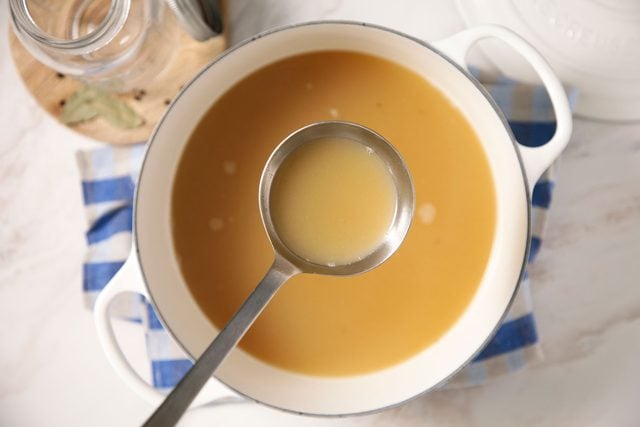
Homemade chicken broth will keep for up to four days in the refrigerator. Allow it to cool slightly before popping into the fridge (boiling-hot broth might warm up the whole refrigerator, which can make other food spoil). Once it’s cooled off a bit, transfer the broth to an airtight container.
How long does boxed or canned chicken broth last in the fridge?
Once opened, boxed chicken broth will keep for up to five days in the refrigerator. You should store it directly in the box.
Canned chicken broth will keep for up to four days. For the best flavor and freshness, transfer the broth from the can into a food-safe glass or plastic storage container with a lid.
Tips for Saving Chicken Broth
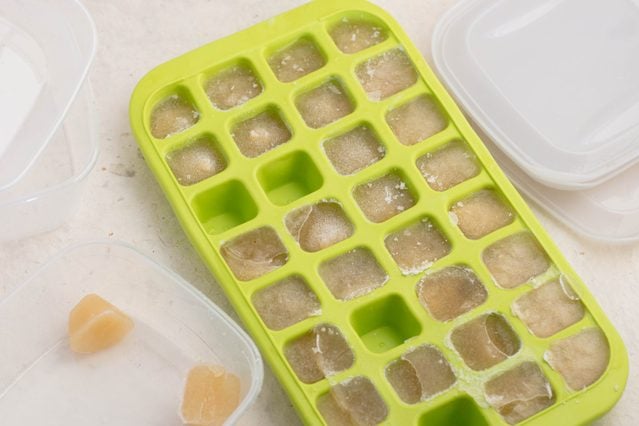
Here are a few ways to make sure your chicken broth doesn’t go to waste:
- Store it properly: When refrigerating chicken broth, store it in a clean container with a lid that closes tightly. Try to minimize how much air is in the container; it’s best to use one that just fits the broth.
- Label with dates: Whether refrigerating or freezing, it’s smart to label broth with the date it was made (or opened). This way, you’ll never toss a carton too soon or use it too late.
- Freeze: Homemade chicken broth will keep for up to six months in the freezer, and store-bought broth will last for four months. There are a few tricks to freezing broth. First, allow it to cool completely before transferring it to the freezer. Second, choose the right container. If you don’t have much broth left, freeze it in an ice cube tray, then store the frozen cubes in a plastic bag. Pull one or two out whenever you need a touch of flavor in a recipe. For a lot of leftover broth, store in gallon resealable plastic bags or in Mason jars. If you opt for using glass jars, leave at least 1-inch of headspace at the top so the soup can expand as it freezes.
- Use smaller amounts: You can use broth in more than just soup! There are lots of ways to use up leftover broth and leftover stock. Replace some or all of the water in a pot of rice, quinoa or other grain. Simmer red or brown lentils in broth. Deglaze a skillet with a splash of broth. Smooth out mashed potatoes with a little bit of broth. The possibilities are endless!
The post How Long Does Chicken Broth Last in the Fridge Before Going Bad? appeared first on Taste of Home.
]]>The post What Is the Difference Between Olive Oil and Extra Virgin Olive Oil? appeared first on Taste of Home.
]]>Which one should you choose?
This golden oil purportedly helps prevent many major diseases and is credited with a variety of health benefits, but much of that can depend on the type of olive oil you buy. Let’s go over the basics of olive oil vs. extra virgin olive oil, and learn when it’s best to choose one over the other.
Also, check here the types of olives all devotees must try in their lives.
What is olive oil?
Olive oil is produced by crushing the ripened fruit of the olive tree. Olive trees as we know them date back thousands of years, and historians believe that humans have been making and consuming olive oil for more than 6,000 years. Some fossils suggest that relatives of the olive tree were around millions of years ago. The olive tree is native to Asia Minor but eventually spread across the entire Mediterranean basin. Most of the world’s olive oil is still produced in those regions.
The oil is liquid at room temperature, but solidifies when cold. Olive oil is a crucial component of the super-healthy Mediterranean diet and is one of the primary cooking fats in Greece, Spain and Italy, among other places.
Regular olive oil, which can’t be labelled “virgin” or “extra virgin,” is more refined—aka less flavorful—than virgin oil, and may have been heated during production. It is considered to be a lower grade of olive oil. It can be made using olives that had defects in flavor, but because it is refined, those flavor notes will not be noticeable in the finished product.
What does olive oil taste like?

Regular olive oil will have some of the characteristics of the olives from which it was made, but because of the way the oil is produced, the flavor will generally be comparatively smooth and mild. As the oil is heated and refined, the compounds that give olive oil its unique and interesting flavors are removed.
How do you use olive oil?
Non-virgin olive oil can be great as a cooking oil. It can be used to saute vegetables or in marinades for meats (although virgin oils are great for those tasks too).
There is debate about whether olive oil should ever be used for frying as it has a lower smoke point than peanut oil, canola oil, corn oil and other oils prized for use in super hot applications. A refined olive oil will likely have a higher smoke point than one that is unrefined and will definitely have a higher smoke point than an oil that is unfiltered. To settle any confusion, we have a guide on cooking oils that discusses all sorts of uses and applications.
What is extra virgin olive oil?
Extra virgin is a classification for olive oil that has been produced by cold mechanical extraction—such as by grinding with stones—and without the use of chemicals (some much lower quality olive oils are processed with a chemical treatment).
To qualify as extra virgin, the oil must also receive high marks for its flavor and have a low percentage of free oleic acid. Cold-pressed extra virgin olive oil retains much more of the nutrients that offer the health benefits touted by olive oil. Oil that is cold pressed and doesn’t merit the extra virgin designation can be sold as virgin oil.
What does extra virgin olive oil taste like?
Extra virgin olive oil is made from the same types of olives as regular olive oil, but it’s a grade reserved for the most delicious batches. Virgin oils will taste different depending on the kind or kinds of olives that were pressed to make it and how ripe the olives were at harvest time.
Some virgin olive oils are smooth and buttery tasting, but many have peppery and grassy notes, and will cause a little tickle in the back of the throat. Certain olive oil packages list information about the flavor profile of the oil within.
How do you use extra virgin olive oil?
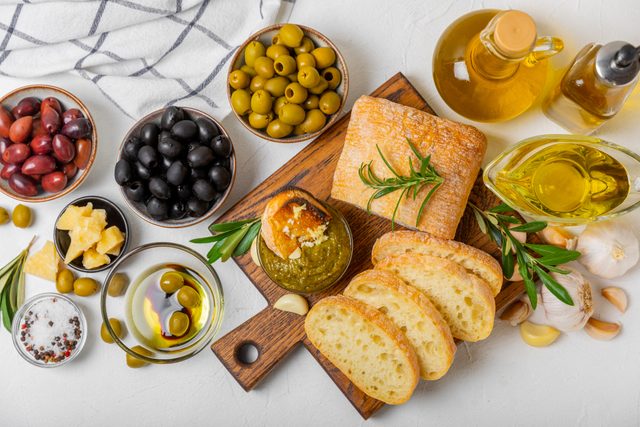
The top-flight flavor means that extra virgin oil is superb for taste-forward applications such as drizzling over salads or as a dip for breads. Because extra virgin oil is more expensive than its virgin counterpart, budget-conscious cooks might want to save it for times when its flavor will truly stand out. However, if you’ve got cash or you’re budgeting for healthier foods, extra virgin olive oil can be your go-to oil for low to medium temperature cooking.
Extra virgin olive oil is considered one of the healthiest fats. However, because of its robust flavor, olive oil is not an all-purpose oil. If you want the health benefits of olive oil without the zing, it can be combined with neutral or nutty-tasting oils such as sunflower or grape seed.
Solo, olive oil is excellent in Mediterranean dishes such as hummus, pesto and gazpacho. Starchy foods pair well with the oil’s rich and sharp taste, so choose olive oil for tossing with pasta, making pizza dough or as a dip for bread. It is also an important part of the dressing for tabbouleh.
Extra virgin oil can be used in sauces and for cooking in place of regular olive oil, if desired.
Olive Oil vs. Extra Virgin Olive Oil
So, regular olive oil is refined and may be produced using heat. Virgin and extra virgin oil are very similar to each other, but the extra virgin version has the finest flavor.
If you’re a cost-conscious cook, it can be great to use a less pricey oil for pan cooking and in sauces, but keep a bottle of extra virgin olive oil around for use in salad dressings and as a healthy drizzle on top of soups, a dip for bread and so on. Choose virgin olive oil as a middle-of-the-road option for cooking and save the fanciest stuff for special occasions.
If price is no object and you only want to keep one bottle of oil on the shelf, go for the extra virgin. It can be used in all of the same ways as other olive oils, but will be particularly delicious. In addition, extra virgin oil is purported to have the most health benefits.
Don’t forget that some olive oils are buttery and well-rounded, while others are grassy or peppery and piquant. Finding the flavor of olive oil that you like most may be even more important than whether it’s virgin or extra virgin!
Whichever you choose, make sure you store the olive oil properly.
The post What Is the Difference Between Olive Oil and Extra Virgin Olive Oil? appeared first on Taste of Home.
]]>The post How to Peel Butternut Squash Using the Microwave Trick appeared first on Taste of Home.
]]>But when it comes to cooking with butternut squash, there are challenges. It’s notoriously difficult to peel and cut winter squash. The skin of butternut squash is tough, often making it tricky to peel without hurting your fingertips.
Fortunately, Monique, the creator behind Ambitious Kitchen, shared a hack makes peeling infinitely easier. That way, we can effortlessly whip up the best butternut squash recipes all season long!
What’s the best way to peel butternut squash?
You need to microwave the squash first! Simply poke holes in the butternut squash before microwaving it for around 2 minutes.
Monique says this extra step makes “peeling SO much easier.” Microwaving the squash softens its skin and helps chefs save more of the precious orange insides. Genius!
View this post on Instagram
Instagram commenters were delighted by the hack. One wrote, “I’ve never thought to microwave it!” Another beams “the microwave tip gets an A++++ from me.” And if you’re having any doubts, one user says that they tried the hack “and it really helped!” I immediately sent this butternut squash peeling hack to Taste of Home senior food editor Peggy Woodward, and she gave it a thumbs-up. So this trick is a must-try!
Are there other butternut squash hacks?
Beyond this peeling hack, Monique has more butternut squash suggestions. She advises taking out butternut squash seeds to “roast them up.” Just add olive oil, salt, brown sugar and a little cayenne pepper to the seeds on a baking sheet, then roast for 20 to 25 minutes at 325°F. Yum!
Her final suggestion? Freeze extra cubed butternut squash in a Stasher or zip-top bag. It can last for up to 10-12 months and still taste delicious.
Now that you know about this hack, it’s time for roasted butternut squash fries!
The post How to Peel Butternut Squash Using the Microwave Trick appeared first on Taste of Home.
]]>The post Can You Tenderize Steak with Baking Soda? appeared first on Taste of Home.
]]>For some cuts, it’s important to tenderize steak before cooking. The term is as straightforward as it sounds—making meat more tender. There are a variety of not-so-secret kitchen secrets about the best way to tenderize steak, including one surprising household item: baking soda. Read on to learn how to tenderize steak with baking soda!
Does baking soda tenderize steak?
Yes, beyond its clever cleaning uses and role as a staple baking ingredient, baking soda can also be used to tenderize steak. Or any meat, really. According to professional chef and Taste of Home food writer Lindsay Mattison, it’s a surprisingly effective method.
Mattison explains that when baking soda comes into contact with a steak’s surface, it alkalizes the steak, or raises the steak’s pH levels. This helps the meat fibers be less tight. She clarifies that it’s similar to the salt in a brine solution, which makes the steak more tender (and tasty). It also helps the steak retain more water.
Just look at this TikTok from @CheffreyEats, who compares the outcome of cooking two steaks—one tenderized with baking soda and one without. The result is noticeable. As one user comments, “it makes a world of difference in tenderness.” Genius!
@cheffreyeats Perfect Steak! #steak #bussin #cook #cooking #chef #fyp #foryou #foryoupage #velveting #viral #trending #homecooking #dinner #chefathome #recipe ♬ original sound – CheffreyEats
How to Make Steak Extra Tender
Take a look at the most unusual methods you can use to make steak more tender:
Baking soda
Add baking soda to the steak’s surface by delicately sprinkling it on. Mattison emphasizes to make sure not to overdo the amount of baking soda you use because it can easily over-tenderize the meat. Carefully rub the baking soda into the meat’s surface before moving it to a zip-top bag or glass bowl.
From there, leave it in the refrigerator for at least 3 hours or overnight. Then take the meat out of the container and rinse it ensuring that all—or most—of the baking soda is off the steak. Then grill the steak and see if you notice the difference!
Yogurt
Another surprising yet efficient tenderizing agent that Mattison suggests is plain Greek yogurt. Use it to create a marinade, and not only does it tenderize steak, but it creates a dynamic flavor, too.
Coffee grounds
Coffee lovers, this tenderizer is for you. It may not be the most common choice, but its acidic properties are somewhat similar to yogurt in enhancing the flavor and making the meat more tender. Try out this coffee marinated steak to see the process for yourself.
The post Can You Tenderize Steak with Baking Soda? appeared first on Taste of Home.
]]>The post How Long Do Eggs Last? appeared first on Taste of Home.
]]>“Eggshells are semipermeable membranes made almost entirely of calcium carbonate,” says Ann Ziata, chef at the Institute of Culinary Education. “Luckily, there is another, stronger protective layer underneath the shell that works to keep harmful bacteria from entering.”
This design keeps eggs fresh for a surprisingly long time.
How long do eggs last in the fridge?
Whole eggs in the shell last about a month in the refrigerator, but that time varies when outside the shell. “Raw egg yolks and whites last up to four days in the fridge,” says Ziata. “Hard-cooked eggs can be stored for three to four days.” The U.S. Food & Drug Administration offers more flexibility, saying that hard-boiled eggs should be used within a week.
| Type of Eggs | Refrigerator (40°F) |
| Raw whole eggs, in shell | 3 to 5 weeks |
| Raw whole eggs, beaten | up to 4 days |
| Raw egg whites | up to 4 days |
| Raw egg yolks | up to 4 days |
| Hard-boiled eggs, in shell | up to 7 days |
Source: USDA
Toss anything that smells off or looks unappetizing. If you’re unsure, use the float test to tell if eggs are fresh.
The Ideal Refrigerator Temperature for Egg Storage
The USDA advises storing eggs in their carton in the coldest part of your fridge, usually the back or bottom shelf.
“The coldest part of your fridge, set to 40°F, is perfect,” says Ziata. “Don’t store eggs on the door; this area receives large temperature increases each time the fridge is opened.”
She explains that being exposed to warmer temperatures will increase the speed at which bacteria can grow. That’s why it’s best to keep the more shelf-stable items, like condiments, on the door shelves. Store your eggs with cooked chicken, lunch meat and other perishable items on the bottom shelf.
Don’t keep store-bought eggs on the counter, unless you plan to bake with them in the next 30 minutes.
Egg Storage Tips
When it comes to storing eggs, Ziata says that since eggs are porous they can absorb odors from strong-smelling foods like cut onions. Therefore, it’s best to keep them separate, with the eggs in their carton and odorous foods in their own airtight container.
There’s no need to wash your eggshells prior to use either, as all USDA-grade eggs are prewashed. However, “backyard laid eggs can be quite dirty, so if you are harvesting eggs, you’ll need to take them through a specific washing process to remove any potential hazards (including salmonella),” she says.
Whether USDA-grade eggs or farm fresh eggs, though, it’s important to never use eggs with cracked shells, as they aren’t safe to eat.
The post How Long Do Eggs Last? appeared first on Taste of Home.
]]>The post Do Pickles Need to Be Refrigerated or Can They Be Left Out? appeared first on Taste of Home.
]]>Should pickles be refrigerated?
Open jars of pickled food should always be refrigerated—unless you have a root cellar or other storage space that stays a constant 34° to 40°F. Even some unopened jars should be stored in the refrigerator. For instance, if you bought them from a refrigerated display case, they’re likely unpasteurized and sold cold to keep the pickles crisp and free from harmful bacteria.
Unopened jars that have been pasteurized and sealed—the ones you find on grocery store shelves with other canned goods—can be stored at room temperature until you pop the lid open.
Also, check what is a pickle all about!
How long do pickles last on the counter?
Like most other foods, pickles should be left out on the counter for no more than two hours. Despite being preserved in brine, bacteria can still form in the pickle jar. Even in two hours, pickles’ texture can start to change. Warm temperatures cause pickles to soften and lose their crunchy texture. Keeping them cool keeps them crisp.
Fridge-cold temperatures prevent mold and yeast from forming in the pickle jar, but other factors can affect the contents, too. Pickles that stay fully submerged in their brine, aka pickle juice, are less likely to spoil. Help pickles last even longer by reaching into the jar with a clean fork every time you want a crunchy snack, then screwing the lid on tight when you’re done.
How to Tell if Pickles Have Gone Bad
So we’ve answered the question, do pickles need to be refrigerated (yep). The next one to ask is, can pickles go bad? It’s not likely to happen if you store them properly, but it is possible.
When pickles go bad, you can usually see or smell it. If your pickles have any of these problems, throw them out or toss them in the compost:
- Change in the original color of the pickles or brine
- Unappealing smell
- Surface mold
- Slimy or mushy texture
- Bulging jar lid
- Fizzy brine
Can you store pickles in the freezer?
Pickles generally shouldn’t be stored in the freezer. Freezing and then defrosting can make them soft and mushy.
The exception is homemade freezer pickles, which are made by packing sliced vegetables in vinegar and sugar before they are frozen. They can have a surprisingly fresh, crisp texture when thawed and eaten straight from the fridge.
Does storage differ for canned vs. store-bought pickles?
Properly sealed pickles, whether store-bought or homemade using a steam canner or hot-water bath, can be stored in the same way. Put them in a cool, dark, dry place before you open the jar and in the refrigerator once you pop the lid.
If you bought pickles from a market’s refrigerated section, they need to go straight into your fridge. The same is true of homemade fermented, refrigerator or quick pickles. Those submerged in a vinegar brine might be refrigerated immediately or once the brine cools, depending on the pickle recipe. Fermenting might take weeks, after which refrigeration slows the process and keeps the pickles crisp.
The post Do Pickles Need to Be Refrigerated or Can They Be Left Out? appeared first on Taste of Home.
]]>The post Do You Have to Peel Zucchini? Our Pros Settle the Debate appeared first on Taste of Home.
]]>Do you need to peel zucchini?
Our Test Kitchen has good news for you: You do not need to peel zucchini before using it in a recipe.
Zucchinis have very thin, tender skin. “It cooks up well without being tough,” explains Mark Neufang in the Test Kitchen.
When cooked, particularly once shredded, the texture is very soft and you won’t be able to detect the peel at all—other than its vivid green color. That hue is part of what makes recipes like zoodles, zucchini muffins and kabobs so appealing.
Can you peel zucchini?
Yes, you can peel zucchini if you like. Catherine Ward in the Test Kitchen explains that it’s not necessary from a culinary perspective, but she does peel the squash when she makes zucchini desserts at home.
“My husband won’t eat anything with zucchini in it,” she says. “If I peel it, though, he doesn’t notice it.” This is a trick you can use in your own kitchen for picky eaters. Sorry to give away your secret, Catherine!
How should you prep zucchini?
If you don’t need to peel zucchini before including it in a recipe, you may be wondering if there are any steps you need to take to prep this veggie. There’s more good news here: You don’t have to do much!
Mark explains that all you need to do to prep this veggie for cooking is to wash it, pat it dry and slice off the stem. From there, you can go right to your cutting board, grater or spiralizer. This ease and versatility is what makes zucchini such an appealing summer veggie.
The post Do You Have to Peel Zucchini? Our Pros Settle the Debate appeared first on Taste of Home.
]]>The post What Is Sweet Cream Butter? appeared first on Taste of Home.
]]>While it’s easy to understand what many of these labels mean at first glance, even experienced bakers may find themselves asking so what is sweet cream butter again?
What Really Is Sweet Cream Butter?
Sweet cream butter is just another name for plain ol’ butter. The term sweet cream is used to differentiate this type of butter from options that used cultured cream as a base.
Boxes labeled “sweet cream” use fresh cream as the base. Depending on the package you grab, this butter may also include a small amount of salt. Despite the name, sweet cream butter contains no sugar and it doesn’t have any inherent sweetness. You’ll find that it tastes like straightforward butter.
In contrast, butter made with cultured cream, like Vermont Creamery or Banner Butter, tends to have a tangier flavor.
Regular Butter vs. Sweet Cream Butter
So when it comes to regular butter versus sweet cream butter, there’s no difference to be had. In fact, most types of butter—from sweet cream to Irish to Amish—can be used interchangeably in recipes.
The one label you should pay close attention to, though, is salted or unsalted butter. Some recipes do specify, and you should take note to ensure the best results.
The post What Is Sweet Cream Butter? appeared first on Taste of Home.
]]>The post Fresh to Dried Herb Conversion: How Much to Use in Recipes appeared first on Taste of Home.
]]>The Fresh to Dried Herb Conversion Rate

Dried herbs are a concentrated form of fresh herbs, so you don’t need to use the same quantity when converting recipes. As a general rule of thumb, we like to use a 3:1 ratio of fresh to dried herbs. For example, if your recipe calls for one tablespoon of fresh oregano, use one teaspoon of dried oregano instead. (This is easy to remember if you know your cooking measurement conversions, where three teaspoons equal one tablespoon.)
Of course, this conversion is just a starting point. Dried herbs can be sold in several different forms—garlic can be powdered, granulated, minced or diced—so you may need to adjust the ratio accordingly.
For example, rubbed sage consists of whole dried sage leaves while ground sage is a fine powder. The whole form takes up more volume in a measuring spoon, so a 3:1 ratio might be spot-on. Ground sage, on the other hand, will be more potent in the same quantity, so you may want to use a 2:1 or 1:1 ratio.
The same goes for freeze-dried herbs, which retain more of their original flavor and texture compared to conventionally dried herbs. You may find a lower ratio works best with these types of dried herbs, so start small and taste as you cook to find the right conversion rate.
Cooking with Dried vs. Fresh Herbs
The most important distinction between fresh and dried herbs involves timing. The flavor and aroma are immediately apparent in fresh herbs, so they should be added near the end of the cooking process. Otherwise, the flavor can dissipate as the dish cooks.
Dried herbs, on the other hand, take longer to release their flavor. It’s best to add them early in the cooking process. Blooming dried herbs in a little hot oil or adding them to the recipe while cooking onions and garlic goes a long way to bring out dried flavors.
There are also times when a substitution simply won’t work. Dried basil wouldn’t be the same on a caprese salad or margherita pizza, where the whole, fresh basil leaves are an important part of the eating experience.
Dried herbs don’t work as well in bright, herbaceous recipes like pesto or chimichurri, either. In these instances, we recommend sticking to fresh herbs. Keep them alive and vibrant for up to a month by storing herbs upright in a mason jar filled with water, just like flowers. Once they start to look wilted and sad, freeze herbs in water or oil for use in soups or sauces.
The post Fresh to Dried Herb Conversion: How Much to Use in Recipes appeared first on Taste of Home.
]]>The post What Is Pickling Salt and How Is It Used? appeared first on Taste of Home.
]]>
Salt drives the magical transition from raw vegetable to crunchy pickle. It may play the leading or supporting role depending on the type of pickle you’re making. Still, whether you’re creating a quick pickle for dinner, packing a jar of fridge pickles, canning a large batch or fermenting for an intense sour flavor, you don’t want to reach for your everyday salt shaker. To create beautiful jars of crisp, colorful pickles, you need pickling salt.
What is pickling salt?
Pickling salt has just one ingredient: salt, aka sodium chloride. It doesn’t contain anticaking agents, which can make pickle brine cloudy, or iodine, which can darken pickles. Most types of pickling salt, sometimes labeled canning salt, are extra fine so they dissolve quickly.
In a vinegar brine, salt draws water out of produce to make the pickles more crisp, particularly water-heavy vegetables like cucumbers. It also adds flavor and helps to preserve as it penetrates the cucumber’s cells.
In fermented pickles, salt becomes the essential preserving ingredient. It still helps to ensure crispy pickles and adds flavor, but crucially, it creates a stable brine that controls the speed of fermentation and lets beneficial lactic acid bacteria flourish. Without the right amount of salt, the food you’re trying to ferment will spoil.
How to Use Pickling Salt
In the United States, we typically picture cucumbers when we think of pickles, but pickling salt can preserve all sorts of vegetables and fruits, from cauliflower to strawberries.
Salt plays a key role in most pickle brines, and temporarily doubling down on the salt can make pickles even crunchier. To turn watery produce like pickling cucumbers and watermelon rind into the crispiest pickles, sprinkle pickling salt over raw slices, or dissolve the salt in cool water and pour it over the raw slices. Let the salted vegetable or fruit sit in the refrigerator for a few hours, and then rinse and drain it well. This removes some of the water naturally in the produce, along with most of the added salt.
Then, make the brine, following a safe pickling recipe and using the precise amount of salt and other ingredients. This is especially important when canning, where the proper balance of brine ingredients ensures the pickles are acidic enough to seal in jars, and also when fermenting. During fermentation, the right amount of salt lets beneficial bacteria multiply and preserve while keeping harmful bacteria at bay.
Pickling Salt vs. Kosher Salt

Kosher salt can often be used for pickling, but be sure to check the label closely. Some widely available brands of kosher salt include anticaking ingredients that prevent it from clumping in the box but will turn pickle brine cloudy.
Pure pickling and kosher salts typically dissolve rapidly but have different textures. Fine-grained pickling salt and granulated sugar disappear at about the same speed when heated in water and vinegar. Flaky kosher salt dissolves in room-temperature water with just a few seconds of stirring, making it ideal for unheated brines.
Is there a substitute for pickling salt?
If you’re here because you’re in the middle of a recipe that called for pickling salt, and you’re wondering, what is pickling salt, then you probably need a substitute quick. Luckily, any culinary salt that lists only “salt” as its ingredient can work. If you are substituting another type of pure salt for pickling salt, you need to be sure you are using the right amount.
Fine-grained pickling salt packs more tightly into a tablespoon than flaky kosher salt, so it can weigh almost twice as much. If a pickling recipe calls for one type of salt and you want to substitute another, be sure to do so by weight instead of volume (using a food scale will do the trick!).
Tips for Choosing and Storing Pickling Salt
To make pickling easy, choose the type of salt called for in the recipe or follow a recipe that gives salt in grams. Salt keeps indefinitely when stored properly, so you may want to keep both pickling or canning salt and kosher salt on hand if you make lots of pickles.
Pickling salt should be stored in a cool, dry place. It can be stored in its original packaging, with the opening taped closed to avoid spills, or an airtight container. Because it lacks anticaking agents, it can become clumpy over time, especially if left open next to a loaded water bath or steam canner. If it cakes up, shake the package or stir the salt with a fork to break up large chunks before you measure it for the recipe.
The post What Is Pickling Salt and How Is It Used? appeared first on Taste of Home.
]]>The post What Does ‘Room Temperature’ Mean, Exactly? appeared first on Taste of Home.
]]>What is considered room temperature?
Room temperature isn’t a precise number. Rather, it’s a range that spans about 68º to 72ºF. Because this is a general term, there’s some wiggle room here, so if your house is a little chilly at 65º, it’s still OK to call that butter room temp.
Now, why is it important for certain ingredients to be used at room temperature? Well, room-temperature butter, cream cheese and eggs incorporate into batters, doughs, buttercreams and other recipes more readily. They also create a smoother end product, especially when it comes to frosting.
How to Bring Ingredients to Room Temperature
As important as room-temperature ingredients are in baking, it’s easy to forget about taking eggs or a few sticks of butter out of the fridge before you want to make cookies. The good news is that there are a few tricks to bringing all sorts of ingredients up to temperature in a flash.
How to Get Eggs to Room Temperature

Eggs that have warmed up a bit after being in the fridge blend into doughs and batters more easily. Room-temperature eggs also create loftier meringues.
If you need to bring your eggs up to temp, place them in a bowl of warm (not hot) water for 10 to 15 minutes. This will remove the chill.
How to Make Butter Room Temperature

It’s always a bummer when you have the urge to make a batch of chocolate chip cookies and you remember that all your butter is still in the fridge. Don’t fret, though. There are a few tricks to soften butter quickly.
The first technique is simple: Use a box grater to break down the butter into even smaller pieces. This works for butter from the fridge or right out of the freezer.
You can also cube the butter into smaller pieces. The more surface area and the smaller the portions of butter are, the more quickly it’ll warm up.
Lastly, you can make a mini heat dome, a viral trick for softening butter. Fill a tall glass or bowl with hot water and let it sit. Then empty the vessel and place it upside-down over the butter. The heat will gently warm up the butter in 10 minutes or less.
How to Bring Cream Cheese to Room Temperature

Soft cream cheese is a must whether you’re stirring up a batch of cream cheese frosting or making a creamy dip to enjoy at a party.
If you need to soften cream cheese, cube it and let it sit at room temperature for about 30 minutes. Like with butter, the smaller the pieces, the more quickly this ingredient will soften.
If you’re really in a rush, you can also soften cream cheese in the microwave. Remove the cream cheese from its foil wrapper and zap in five-second increments until it’s pliable—about 20 seconds total.
Is room-temperature dairy safe?
Room-temperature dairy products are safe to use if enjoyed within a specific span of time, which varies by product. Here’s how quickly you should use these room-temp foods:
- Butter: According to the USDA, it is safe to leave butter at room temperature for several days. During warm months, though, it’s best to use butter within a day or two so it doesn’t get rancid. (Did you let it go too long? Your nose will know.)
- Milk, cream, cream cheese, sour cream, yogurt and more: Other dairy products can be left out at room temperature for up to two hours, per the USDA. If temperatures are higher than 90º (at a summer cookout, for example), use those products within an hour.
- Eggs: The two-hour rule also applies to eggs.
The post What Does ‘Room Temperature’ Mean, Exactly? appeared first on Taste of Home.
]]>The post Pork Chop Temperature Guidelines for Perfectly Juicy Chops appeared first on Taste of Home.
]]>“In the past, when pigs were often fed food scraps, there was a concern about the pigs becoming infected with parasites,” says James Murray, a professional chef who has worked for the National Pork Board for over 10 years. “To minimize that risk, chops and other muscle cuts got overcooked to the point they were dry and flavorless.”
Luckily, all that has changed. “The industry has made many changes regarding housing and pig diets, so the risk of parasites in pork you buy at the grocery store has dropped significantly,” Murray says. That means you can safely cook pork chops to a lower internal temperature. If you know how to check pork chop doneness with a meat thermometer, your chops will always turn out juicy and tender.
Internal Temperatures for Pork Chops

According to the USDA, the food-safe cooking temperature for whole muscle cuts of pork (like roasts and chops) is 145°F, followed by a minimum three-minute rest. “A chop cooked to that temperature is just a different eating experience,” says Murray. “It’s juicier, more flavorful and certainly more tender. There’s nothing better than a pork chop or roast that’s rosy pink in the middle when you cut into it!”
Yes, contrary to what we were told as kids, pink pork is safe to eat. We’ve learned that color is no longer a definitive marker of doneness or food safety. That said, if a medium-rare pork chop isn’t desirable, you can cook your pork to a higher level of doneness.
- Medium-rare pork chops: 145 to 150°
- Medium pork chops: 150 to 155°
- Medium-well pork chops: 155 to 160°
- Well done pork chops: 160°
However, finishing pork below the USDA-approved pork cooking temperature poses a risk. “The USDA determined that any parasites that could contaminate pork die at 138° internal temperature,” says Murray. He explains that the three-minute resting period brings the internal temperature up a few degrees, reaching that approved 145° mark and ensuring a safe, juicy and flavorful eating experience.
How to Check the Internal Temperature of Pork
Using an instant-read meat thermometer is the most reliable way to check the temperature of pork chops to ensure they’re perfectly cooked. “There’s no substitute for a good digital meat thermometer, which can give you an exact internal temperature so there’s no guesswork involved,” says chef Matt Moore, author of Butcher on the Block and a cast-iron cooking enthusiast with extensive expertise in cooking over live fire.
There are several types of thermometers, and the best meat thermometer depends on the cooking method. Instant-read thermometer probes are meant to be used toward the end of the cooking process, while leave-in thermometers have more durable probes. They’re ideal for slower cooking methods like barbecuing or oven-roasting large cuts, but they can also be used when baking or grilling thick or double-cut pork chops.
How to use a meat thermometer on pork chops
When it comes to accurately checking the internal temperature of meat, Moore says to take the temperature from a few places. Insert the thermometer into the center or thickest part of the pork chop, and make sure it’s an inch away from any bone. Temperatures taken from the meat adjacent to the bone will typically be a bit lower. Depending on the size and thickness of your pork chop, you may need to take the temperature through the side.
“Ultimately, taking temperatures throughout the process is a good rule of thumb until you become more comfortable with temperature control,” says Moore. That’s where leave-in probes come in handy. Some models even pair with a phone app via Bluetooth and create alerts to tell you when your meat is ready.
If you’re checking the temperature on demand, we recommend doing so before removing the pork chop from the heat source. Measuring the temperature immediately after removal is also fine, but you’ll want to return the pork to the heat if the internal temperature doesn’t quite reach the mark.
How Long to Cook Pork Chops

The ideal cooking time for pork chops depends on the cooking method and the thickness of the meat. Use a meat thermometer to measure for doneness, but you can use these guidelines for how long to cook a one-inch thick pork chop on the grill, stovetop, oven, broiler or slow cooker.
- Grilled pork chops: For deliciously juicy grilled pork chops, preheat the grill to medium heat. Grill for four to six minutes on each side, turning occasionally to prevent burning.
- Pan-seared pork chops: We like to use a cast-iron skillet when making pan-seared pork chops, but any sturdy, heavy-bottomed pan will do. After preheating your pan, add the seasoned pork chops and sear for four to five minutes per side, flipping halfway through to ensure even cooking.
- Baked pork chops: The juiciest baked pork chops are cooked in a 350° oven. Sear your pork chops in a skillet, then bake them for 15 to 20 minutes. Boneless pork chops will cook a little faster than bone-in chops, so keep a close eye on the internal temperature to know when they’re done.
- Broiled pork chops: When making broiled pork chops, preheat the broiler and adjust the rack height as specified in the recipe. If the rack is too high, the chops may burn before cooking through the middle. Broil for four to five minutes, or until the internal temperature reaches 145°.
- Slow-cooked pork chops: To make slow-cooker pork chops, place the chops in the slow cooker with a broth or sauce. Cover and cook on low for two to three hours, or until tender.
How Long to Rest Pork Chops
Hitting the safe pork cooking temperature of 145° is a must, but resting is just as crucial for safe consumption. The resting time (aka standing time) allows for carryover cooking, a process that allows the heat from the outer layers to move towards the meat’s innermost layers. As the pork rests, the final internal temperature will rise by a few degrees.
Beyond safety, resting also improves the texture of the pork chops. “That time allows the juices to re-distribute themselves more evenly throughout the muscle,” says Murray. “Give the chop a moment to collect itself, and it will deliver the maximum flavor profile and juiciness.”
Pork Cooking Times and Temperature
While pork chops and other whole muscle cuts of pork can be cooked to an internal temperature of 145°, ground pork should be cooked to 160°. That’s because most harmful pathogens in pork inhabit the surface of the meat. The grinding process creates more surface area, exposing more of the meat to potential bacterial contamination. Environmental factors like improper cleaning of grinders and poor storage conditions can also increase the risk of contamination.
The USDA guidelines below reflect the safe temperatures to cook pork, but Murray says they’re not necessarily the ideal temperatures for tenderness, flavor or texture. “For example, if you’re cooking or smoking a pork shoulder for pulled pork, you’ll want an internal temperature between 200 and 205°. The meat is safe to eat at 145°, but it’s impossible to tear the muscle apart at that temp!”
| Pork Cut | Recommended Cooking Temperature |
| Whole muscle pork cuts, such as pork loin, pork chops, pork shoulder, pork tenderloin or pork belly | 145°F and allow to rest for at least 3 minutes |
| Ground pork | 160°F |
| Ham, fresh or smoked (uncooked) | 145°F and allow to rest for at least 3 minutes |
| Fully cooked ham (to reheat) | Reheat cooked hams packaged in USDA-inspected plants to 140°F and all others to 165°F |
The post Pork Chop Temperature Guidelines for Perfectly Juicy Chops appeared first on Taste of Home.
]]>The post What Are Ramps and How Do They Taste? appeared first on Taste of Home.
]]>Whether you’ve seen them at markets before and thought what are ramps? or you’ve never heard of them until now, we’re here with a short explainer on this wild-growing allium. Keep in mind that ramp season starts in late March or early April (depending on the weather) and they’re usually gone by June, so you’ll want to jump on them when you can!
What Are Ramps?
Ramps are a member of the allium family (Allium tricoccum), just like onions and garlic. These wild-foraged onions look a lot like scallions or spring onions, but they have a dark purple stem and broader, more pillowy leaves. They’re native to the eastern half of North America and grow in the United States and Canada. They’re wildly popular in Appalachia, where they’re called “ramsons” in the local dialect. Depending on where you live, they may be referred to as wild leeks or spring onions.
What Do Ramps Taste Like?
Although ramps look like green onions, they don’t specifically taste like onions. Instead, they carry a bright, garlicky flavor profile. Think of a green onion’s flavor mixed with the pungent, spicy kick of raw garlic. That strong garlic presence makes them unique when used raw, but the strong flavor mellows out and becomes reminiscent of leeks when cooked.
Where to Buy Ramps
Ramps are almost impossible to find in grocery stores. You’re more likely to find them at a local farmers market when they’re in season. There are also several ramp festivals throughout the Appalachian region—West Virginia hosts one of the most famous ones—so you might want to plan some travel this spring if you’re a true ramp enthusiast.
Most ramps are wild-foraged and grow under hardwood trees in natural forests. That makes them more expensive than other alliums, given the high cost of labor to harvest and clean them. It is possible to grow ramps from seed, but they’re more slow-growing than other onions. A gardener with a lot of patience could probably enjoy success growing ramps in a backyard garden.
How to Store Ramps
Ramps have a very short shelf life, so you’ll want to plan to eat them within a few days of buying or foraging them. Store ramps in an airtight container or a reusable plastic bag in the crisper bin of your refrigerator for a few days. You can extend their life slightly by wrapping the roots in a damp paper towel before placing them in the bag, where they’ll last for up to four days.
Need to extend a ramp’s life longer than that? Try blanching the leaves and chopping the bulbs for the freezer. Place each component (separately) in an airtight container or a freezer bag and freeze for up to a year. Ramps are also excellent when pickled or folded into butter to make compound butter.
How to Clean Ramps
If you’ve ever worked with leeks, you know just how dirty an onion can get. Ramps are no exception, except that their layers are much smaller than leeks, making them quite a chore to clean! Remember that they’re absolutely worth it as you work on detaching clumps of dirt that cling between each onion layer.
There are several ways to wash vegetables from the farmers market, and the most typical method involves rinsing the vegetable in cold, running water. However, when it comes to ramps, we prefer to cut off the stringy bottom roots before submerging the ramps in a bowl of cold water. Swish them around to remove any dirt or sand. Then, pat them dry with a paper towel.
How to Use Ramps
The entire ramp is edible (except the tiny roots attached to the bulb), but we generally reserve the stalks and leaves for different purposes. The leaves make an excellent pesto sauce, but they can also be softened in butter or oil until they wilt and used in any recipe that calls for tender greens (like spinach). We also love fermenting the leaves alongside cabbage to make a stellar homemade sauerkraut or kimchi.
The bulbs are fantastic when grilled whole and served alongside a peppery steak or on a grilled vegetable platter. We also love tossing raw, chopped bulbs with potatoes for a bold, garlicky potato salad or mixing them with ricotta to make ravioli. There are dozens of applications for using sauteed, chopped ramps, ranging from pasta and soups and to egg dishes, tacos, pizza toppings and more.
Basically, you can substitute ramps for any recipe that calls for garlic or green onions, so have some fun with them!
The post What Are Ramps and How Do They Taste? appeared first on Taste of Home.
]]>The post How to Thaw Pork Chops Safely appeared first on Taste of Home.
]]>“It’s important to remember that raw meat is an unfinished food, meaning it’s likely to be contaminated with bacteria, some of which could be harmful,” says Trevor Craig, food safety expert at Microbac Laboratories, Inc., a third-party testing company in Pittsburgh, Pennsylvania that does food safety and quality testing.
Because of this, being cautious about how you handle raw meat and use it in your kitchen is very important. “Wash your hands and surfaces often, and be cautious with the water that touches these raw products because it can easily splash and leave droplets that can carry harmful bacteria around your kitchen,” Craig says. “Use clean tools when handling and don’t use them for anything else before cleaning them with hot soapy water.”
How Long Does It Take to Thaw Frozen Pork Chops?
The answer depends on the weight of the meat, as larger cuts are going to take longer. Because bacteria can multiply so rapidly in unrefrigerated food, the U.S. Food & Drug Administration (FDA) says it’s unsafe to let food thaw at room temperature. If left unrefrigerated, some organisms can create toxins that will survive the cooking process even if the food is cooked to temperatures that kill the bacteria themselves.
As such, there are only three ways to thaw safely: in the refrigerator, in cold water and in the microwave. Thawing in the refrigerator can take a day or so for ground beef, stew meat and steaks, while bone-in parts and whole roasts may take two days or longer. Plan on one to two days for pork chops.
“Anything above refrigerated temperatures is going to be having the meat in the ‘Danger Zone,’ which is a temperature that is going to be supportive of the growth of bacteria, including dangerous bacteria like salmonella, listeria, or E. coli,” says Craig. If you don’t have time to thaw safely, consider cooking frozen pork chops in the Instant Pot instead (never cook frozen meat in a slow cooker).
How to Thaw Pork Chops in Cold Water
Craig says to place the sealed or unsealed (depending on the packaging) meat submerged under cold water, leave it there for about 30 minutes to an hour, and then replace the water with new cold water. Again, the size of the cut of meat and whether or not there’s a bone will determine how long it will take, but he says generally this can thaw a product in just a few hours. While you’re at it, learn how to make pork Milanese.
How to Thaw Pork Chops in the Refrigerator
“Typically the safest way to thaw is to let it thaw slowly over around 12-14 hours in the fridge,” says Craig, who also notes that it’s best to place the meat in a secondary container on a lower shelf in the fridge. This means that as the product thaws, it will collect any drippings and prevent them from contaminating anything else in your fridge. Your fridge should be at 40°F or below. Once thawed, you can make simple shake-and-bake pork chops.
How to Thaw Pork Chops in the Microwave
Microwaves differ but most have a defrost setting that provides guidance on length depending on the weight of the meat in question. “I would recommend also using a secondary container to prevent any drippings from contaminating your microwave,” suggests Craig. “And in most cases, you would unwrap the meat.”
Tips for Thawing Pork Chops
Never Thaw Pork Chops on the Counter or with Warm Water
“You should never thaw using warm water or just place the meat out at room temperature,” warns Craig. “This is likely to place the meat in a temperature that would encourage the heavy growth of dangerous bacteria.” According to the U.S. Department of Agriculture (USDA), even though the center of the package may still be frozen as it thaws on the counter, the outer layer of the food could be in the bacteria-growing “Danger Zone,” between 40° and 140°.
Feel Free to Cook Frozen Pork Chops if Needed
Out of time for dinner and don’t want to risk an unsafe thawing option? You can cook pork chops from frozen, but it’ll take longer and the results may not be as delicious. “The general guidance is you’d have to cook it about 50% longer than you usually would,” says Craig. However, it’s important to note that the longer cook time from a frozen state may result in a less-desirable texture for those with picky palates.
Once Defrosted, You’re on the Clock
After thawing in the microwave or by the cold water method, the USDA says to always cook your food immediately (so don’t defrost it until you’re ready to start cooking). If you’re using the refrigerator to thaw your pork chops, they should remain safe to eat for three to five days.
Yes, You Can Refreeze Thawed Food in a Few Circumstances
Craig says it is possible to freeze thawed food, but recommends doing so as soon as possible after thawing. He would freeze again after a few days and not wait until the five day shelf life has passed. “It’s important to remember that freezing isn’t an actual ‘kill step,'” he says. “It won’t kill all bacteria.”
Also, refreezing can cause moisture changes in meat which might degrade the taste and texture when you are ready to thaw and cook it again.
The post How to Thaw Pork Chops Safely appeared first on Taste of Home.
]]>The post The Two Best Methods for How to Wash Rice appeared first on Taste of Home.
]]>There are a few ways to do it, so follow the method that best suits your kitchen.
Why You Should Wash Rice
Washing rice before cooking rinses off excess starch, resulting in grains that are separated after cooking instead of clumping and gelatinizing. This is true whether you’re using a rice cooker or cooking on the stovetop.
Washing the grains also makes rice tastier and safer to eat by rinsing away unwanted buildup that can collect on the rice during its processing journey. Debris like dust, rocks, chemicals, and, yes, even bugs, can all be found on rice, so take a few minutes to wash your rice before cooking it to reap the short- and long-term benefits.
How to Wash Rice
Follow one of these two rice-washing methods before cooking. All of the different types of rice need to be washed, including short-grain rice varieties like sushi rice or sticky rice. The only exception is arborio rice. This rice is used in recipes like risotto where that extra starch is essential to the dish.
How to Wash Rice Using a Bowl
To was rice in a bowl, place the desired quantity of uncooked rice in a large bowl. Fill with enough water to just cover the rice.
Use your fingers to agitate the rice with the water. The water will become cloudy. Strain the cloudy water from the rice, fill the bowl with new water, and repeat the process until the water runs clear. Now the rice is properly washed and ready to cook.
How to Wash Rice with a Fine-Mesh Sieve
You can also use a fine-mesh strainer to wash rice. For this technique, add the rice to the sieve then turn on your faucet and let cold water run over the rice, gently moving the rice around to let the water wash every grain. The water that drains will be cloudy at first but keep rinsing the rice until the water runs clear.
If you’re unsure if the water is clear, use a cup or bowl to catch some of the water to inspect it. Once the water is clear, you’re ready to cook the rice.
The post The Two Best Methods for How to Wash Rice appeared first on Taste of Home.
]]>The post How to Wash Grapes the Right Way appeared first on Taste of Home.
]]>Why You Need to Wash Grapes
Grapes are a part of the “Dirty Dozen,” meaning they’re on the list of fruits and vegetables most likely to be covered in pesticides. When produce has such serious chemicals, you need to take extra time and care to clean them really well. The good news? The cleaning supplies you need to wash grapes are food-safe and probably already in your kitchen!
When Is the Best Time to Wash Grapes?
It’s tempting to clean your grape bunches all at once, but the best time to wash grapes is right before you eat them. The excess moisture from washing ahead of time will give bacteria more moisture to grow, speeding up the aging process.
How to Wash Grapes
If you want to ensure your grapes are super clean, try one of the methods below. Go with whatever is in your pantry, but always ensure you have baking soda on hand because it also makes a great grape-cleaning ingredient.
Use Salt and Baking Soda to Wash Grapes
Gather the bunches of grapes you’d like to eat and rinse them off in cold water. Place the grapes in a bowl and sprinkle them with one teaspoon of salt and one teaspoon of baking soda. Use your fingers to gently shake and scrub the grapes for about one minute. Then place the grapes in a fine-mesh sieve or colander and rinse with cold water. Pat dry and eat!
Use Vinegar and Baking Soda to Wash Grapes
If you’re a big believer in cleaning with vinegar, this method is for you. Place the amount of grapes you’d like to eat in a bowl. Fill the bowl with enough water to cover the grapes. Add 2 tablespoons of baking soda and 2 tablespoons of vinegar (you can use distilled or apple cider vinegar). Use your fingers to shake the grapes around in the solution to evenly coat them. Let the grapes sit in the solution for 10-15 minutes.
Take them out of the bowl, place them in a sieve or colander, and rinse with cool water.
How to Store Grapes
When properly stored, your produce will last awhile. Try one of these grape storage strategies to maintain the ultimate crispy grape bunch.
Produce Keepers
Invest in a quality produce keeper for your weekly grocery haul. Produce keepers are designed to help fruit and vegetables avoid spoilage for as long as possible, and there are so many great containers to choose from. An added bonus? Using produce keepers can help achieve a perfectly organized refrigerator.
Bluapple
One of the reasons why produce can expire so quickly is due to the naturally-occurring ethylene gas that fruits and vegetables emit as they ripen. Bluapple was designed to combat that issue. This apple-shaped container has inserts that absorb ethylene gas to extend your produce’s life for as long as possible, which is probably why it has a 4.3-star rating with over 7,000 reviews on Amazon.
Crisper Drawer
You can also store grapes in their original bag, in your refrigerator’s crisper drawer. While this may not be as effective for prolonging life as a produce keeper might be, it’s better than storing in an airtight container. Just don’t make the produce mistake of storing your grapes directly next to other fruit or everything will spoil faster because of the excess ethylene gas.
Next Up: Learn exactly how to wash mushrooms.
The post How to Wash Grapes the Right Way appeared first on Taste of Home.
]]>The post Coconut Cream vs. Coconut Milk: What’s the Difference? appeared first on Taste of Home.
]]>That coconut rice really got me wondering. Sure, I had experienced coconut milk in rich curry and coconut cold-brew lattes, but if it could be used to elevate rice, the possibilities were endless. I wanted to stir this tropical elixir into soups, turn it into a marinade for chicken, use it to simmer mussels and anything else I could think of!
When I got home, I ran to the grocery store to start experimenting—but stopped short when I saw all the choices. From coconut cream vs. coconut milk to full-fat or “lite” options, I didn’t know where to start. The difference between these products is subtle, but it really does matter which one you choose.
Difference Between Coconut Cream, Coconut Milk and Cream of Coconut
What Is Coconut Cream?
Coconut cream is the same thing as coconut milk—coconut meat blended with water—but it contains less water.
While coconut milk is thin like cow’s milk, coconut cream is thick like whipped cream. You can find this fat-rich cream floating on the top of any canned coconut milk, or you can buy it in a dedicated can. It’s great for making dairy-free whipped cream or coconut ice cream, but it can also be used for savory recipes like curries.
Substitutes for Coconut Cream
- Make your own by simmering one part water with four parts shredded unsweetened coconut. Once the mixture comes to a boil, remove the pot from the heat and let it sit until it’s room temperature. Strain out the solids and refrigerate the coconut cream overnight to help it set up.
- Chill a can of full-fat coconut milk in the refrigerator overnight. This will help the thick cream harden on the top, making it easier to skim off the layer of coconut cream. Stop when you reach the liquid layer beneath and reserve the thin milk for another use.
- Use evaporated milk, a concentrated milk product that’s thick and rich like coconut cream. For desserts, use sweetened condensed milk instead.
What Is Coconut Milk?
Coconut milk is unsweetened coconut meat that’s been simmered or blended with water. The mixture is strained to produce a smooth, milky-white liquid that has a similar consistency to cow’s milk. The lightly sweet flavor makes coconut milk a perfect choice for adding to smoothie recipes or your morning coffee, but we also love cooking with it. It’s thicker and richer than most alternative milks, and it has enough fat content to simmer without breaking, adding a nice body to soups, stews and sauces.


Coconut Milk in a Can
If you plan to cook with coconut milk, choose the variety in a can. It contains more fat and typically only has one added ingredient as a stabilizer (guar gum). The cans also have a layer of coconut cream on the top, which can be mixed into the thinner milk or scooped off and saved for another use. Opt for full-fat cans instead of “light” or “lite” options, which have been watered down to reduce the fat content.
Coconut Milk in a Carton
Coconut milk in a carton is generally found in the refrigerated aisle and it’s best for raw applications. Depending on the brand, boxed coconut milk may be fortified with vitamins and added calcium, making it a good choice for drinking straight, adding to coffee, blending into smoothies or using for cereal. Like the “lite” can option, boxed coconut milk has been watered down to make it thin enough to drink, so it has less fat but contains additional stabilizers like xanthan gum and carrageenan.
What Is Cream of Coconut?
Be careful when shopping for canned coconut cream, because you may accidentally pick up a jar of cream of coconut instead. This product is still made with coconut meat and water, but it’s blended with sugar to make the mixture very sweet. It’s popular with bartenders at tiki bars because it has an ideal flavor and consistency for blended drinks like piña coladas.
To use cream of coconut in desserts instead of coconut cream, reduce the sugar in the rest of the recipe.


The post Coconut Cream vs. Coconut Milk: What’s the Difference? appeared first on Taste of Home.
]]>The post This Brilliant No-Peel Hack Makes Cooking Mashed Potatoes So Easy appeared first on Taste of Home.
]]>Luckily, there is a way to deliver a luscious, smooth mash without any peels at all. This no-peel mashed potatoes technique is nothing short of brilliant, and we only wonder why it took this long for it to find us.
How to Make No-Peel Mashed Potatoes
TikToker @xxiamkristinxx showed us this time-saving no-peel mashed potatoes hack, and all you need to make it happen is a grid-style cooling rack.
You’ll want to start with a whole baked potato. We like making air-fryer baked potatoes here because it’s so much faster than the oven (35-45 minutes at 400°F compared to at least an hour in the oven). For a speedy shortcut, you can always pop the potatoes into the microwave for 10 to 12 minutes.
From there, place the wire rack over a bowl, cut the potato in half crosswise and press it flesh-side down into the rack. Like magic, the tender potato will squeeze through the holes while leaving the skin on top. As a bonus, this method pre-mashes the potato so you won’t have to worry about over-mixing it (which is the number one reason why mashed potatoes turn out gummy).
@xxiamkristinxx Mashed Potato Hack #hack #tiktokhack #lifehack #foodhack #cookinghack #cookingtiktok #potatoes #mashedpotatoes ♬ Love You So – The King Khan & BBQ Show
More Hacks for Mashed Potatoes
The mashed potato hacks don’t end here! Try any of these methods to make stellar mashed potatoes for your next dinner party or holiday dinner.
- If you don’t have a wire rack, you can pass the cooked spuds through a potato ricer or food mill. When we tested the best way to mash a potato, these methods resulted in the fluffiest, lightest mashed potatoes.
- You could always keep things classic by using a hand mixer. It’s the way Grandma made mashed potatoes, so it’s good enough for us! This is the way to go if you want a dense, creamy mash.
- Looking for a chunkier mashed potato? Use a hand masher. In general, the less you mash, the lighter the potato, and doing it by hand is a surefire way to avoid over-mashing. We like this method when making mashed potatoes with the skins on.
- When it comes to other electric methods, avoid using a blender or food processor. The blades are just too sharp, and the potatoes will almost certainly turn out gummy. Stand mixers with the paddle attachment also tend to make the potatoes sticky, so we’d steer clear of that one, too.
- Swap out the traditional russet potato for a Yukon gold. This type of potato still becomes light and fluffy when it cooks, but it has a naturally buttery flavor that’s hard to beat.
- Before adding any liquid to your potatoes, mash them briefly with a bunch of melted butter. The fat will coat the starches and build in a little protection from over-mashing. Then, take a moment to heat your milk, half-and-half or cream. The steamy liquid will keep the potatoes warm, so it’s much better than using dairy straight out of the fridge.
- Finally, the ultimate hack for prepping dinner in advance: If you’re not planning to keep any leftovers, make the potatoes ahead of time and hold them warm in a slow cooker for up to four hours. Give them a little stir once an hour, and drizzle in some extra melted butter or hot cream just before serving. After a quick whip with a silicone spatula, they’ll taste just as good as when they were fresh.
The post This Brilliant No-Peel Hack Makes Cooking Mashed Potatoes So Easy appeared first on Taste of Home.
]]>The post What Is Coconut Flour, and How Do I Use It? appeared first on Taste of Home.
]]>There is almost nothing that can’t be made gluten-free! You get to play with certain grains, nuts and even fruit, like coconut, to produce flours that can help with baking.
What Is Coconut Flour?
Coconut flour is a gluten-free flour that can be used in sweet and savory recipes, as well as in coatings or breading for your favorite proteins, like fish or chicken. It’s made from—you guessed it—coconut. Specifically, dried and ground coconut meat. It is rich in fiber and protein.
But this is not your average flour replacement. Other gluten-free flours, like rice or corn, are primarily starch, so they act pretty similar to wheat flours in how they absorb liquids and bind with eggs. Coconut flour is starch-free, and because it’s high in fiber, it absorbs more liquid than other flours. This can lead to denser recipes.
It’s recommended that you limit this type of flour to about 25% of a recipe’s total flour. However, there are always exceptions—I’ve tried 100% coconut flour pancake, bread and cookie recipes that are irresistibly tasty. You can also add extra liquid to your recipe when subbing in coconut flour.
Keep in mind when baking and cooking that this flour does have a distinct coconut taste.
How Long Does Coconut Flour Last?
Coconut flour lasts for six to twelve months if stored in a cool, dark environment. It can last a bit longer in the freezer if stored properly.
Since it contains fat, it can go rancid, so pay close attention to sell-by dates and proper storage.
How Do You Store Coconut Flour?
Before opening, store coconut flour in a cool, dark place. Once it’s opened, you can refrigerate it, transfer it to an airtight container for storage in your pantry, or freeze it in a sealed container.
Where to Buy Coconut Flour
You can buy coconut flour at most grocery stores, whether a major chain or your local co-op. You can also buy it online at Amazon or Target.


Coconut Flour Substitutes
You’ll have better luck subbing in nut flours for coconut flour, rather than grains. Almond flour (perfect for gourmet baking) can be a good bet. However, you’ll use more almond flour than coconut flour as it is much less absorbent. You’ll want to aim for a 4:1 ratio of almond flour to coconut flour (add 4 cups of almond flour for every 1 cup of coconut flour). Whatever you choose to substitute for coconut flour, remember to adjust the ratio and amount of liquid.
If using coconut flour as a thickening agent, you can substitute tapioca flour in a 1:1 ratio.
The post What Is Coconut Flour, and How Do I Use It? appeared first on Taste of Home.
]]>The post You Need to Try This Super Easy Hack for Storing Bacon appeared first on Taste of Home.
]]>Luckily for us, TikToker Charlotte (@cleanfoodiecravings) has come up with her own ingenious way to store bacon. Not only does it keep the bacon fresh, but in her words, it makes “cooking a little less stressful and organized.” Check out her hack in the video below:
How Do I Store My Bacon?
In the video, Charlotte takes the strips of raw bacon out of the package and lays them on a piece of parchment paper, parallel to each other and about 1/2 inch apart. Then, she covers them with another piece of parchment paper and rolls them lengthwise to make little bacon-parchments rolls. From there, she used kitchen scissors to cut in between each roll, so that one piece of bacon makes up each little package. Finally, she places them all in a zip-top bag and pops them in the freezer. So smart and easy!
Does Raw Bacon Freeze Well?
Yes! Frozen bacon will not lose any of its savory flavor or crispy texture when stored in the freezer. It will also save you valuable freezer space, thanks to the compact shape of those little rolls. However, for best results, Charlotte suggests thawing each roll of frozen bacon for five to six minutes at room temperature before unrolling and using.
How Long Can I Keep Bacon in the Freezer?
According to the USDA, you can safely store raw bacon in the freezer for up to four months. But if for whatever reason, freezing raw bacon freaks you out, keep in mind that you can also freeze cooked bacon. Cooked bacon will similarly last about four months in a zip-top bag. The only downsides are that cooked bacon may not be as space-efficient as rolled raw bacon, and you might not get that same satisfying greasy crunch upon first bite.
The post You Need to Try This Super Easy Hack for Storing Bacon appeared first on Taste of Home.
]]>The post How to Store Cake in Your Fridge Quickly and Easily appeared first on Taste of Home.
]]>Luckily, we’ve found a hack on how to store cake in your fridge when you haven’t quite finished. And we’ve got to say, it really is genius!
How to Store Cake
We’ve all been there. You’ve got leftover cake you’ll want to eat tomorrow, but digging it out of a deep food storage container can be messy. Thanks to TikTok user @crappy2happy, we have a cake trick we should have thought of a long time ago.
Flip your container
@crappy2happy Hack 5 is an oldie but a goodie! #cakehack #hacks #hacktime #lifehacks #lifehackstiktok #adulting #didyouknow #mustknow ♬ Elf – Main Theme – Geek Music
I’m guilty of this. I grab my largest food storage container and stuff my leftover cake to the brim. Then, the next day, when I’ve got a wicked craving for some sweet dessert, I attempt to slice the perfect piece out of the container while making an absolute mess. Why did I put myself through that?
Here’s a hack we just can’t get enough of: flip the container. Yeah, that’s honestly it. Think of it as buying a cake from the store. The flat piece stays on the bottom with the dome on the top. Doing this makes it easier to slice and serve cake after the fact. Just remember to leave a note on the container so no one flips it right-side up by accident. Total cake disaster!
Don’t forget about storing your leftover frosting, too.
More tips
- Freeze your cake: You can store frosted, unfrosted and even individual cake slices. Who says you can’t plan far ahead for dessert?
- Let it cool: Allow your cake to completely cool down before placing it in the fridge.
- Pay attention to the ingredients: If your cake contains any dairy (frostings included), it needs to be refrigerated.
- Cut into slices: Wrapping individual pieces can keep your cake from going stale or absorbing unwanted fridge smells.
- Storage: Always use airtight containers—they’ll keep your cake as fresh as possible for as long as possible!
No matter what kind of cake you’re enjoying, we’ve got the right tricks for you. Just don’t eat it all at once!
The post How to Store Cake in Your Fridge Quickly and Easily appeared first on Taste of Home.
]]>The post How to Use a Pizza Stone appeared first on Taste of Home.
]]>Also, discover how to clean your pizza stones properly!
What is a pizza stone?
A pizza stone is a ceramic disc or slab that’s primarily used for cooking pizzas in conventional ovens.
Really good pizzas are often baked at high temperatures in brick ovens or special pizza ovens. However, conventional ovens can’t reach those temps (some brick ovens can hit 800°F or more!). Ceramic pizza stones, however, can get very hot—up to 500°.
Using a pizza stone in your oven allows you to get the crisp crust on pizza that those specialty ovens provide. Without this piece of bakeware, you won’t get that crisp crust that we all crave when baking a homemade pizza.
Types of Pizza Stones
Pizza stones of all shapes and sizes are widely available at kitchen shops and big box stores. You’ll find most of these stones are unglazed ceramic slabs, though there are some options, like this Emile Henry pizza stone, that are glazed. These finishes can be easier to clean than an unglazed stone.
Stones also vary in thickness. Thin stones heat more quickly but won’t hit super-high temperatures. Thicker stones will get hotter, but be sure to budget extra time for the stone to preheat along with the oven.


How to Use Your Pizza Stone
How to use a pizza stone for the first time
Unfamiliar with this ceramic baking sheet? There’s very little prep required. After removing it from its box, wipe down the stone with a damp cloth to remove any dust or remnants from its package. That’s it!
How to use a pizza stone in the oven
Using a pizza stone in your oven couldn’t be easier. The only rule, according to Catherine Ward in the Test Kitchen, is to preheat the stone along with the oven. That means a cold stone goes in a cold oven. Do not place a cold stone in a hot oven. “The thermal shock of putting cold ceramic in a hot oven will shorten the life of the stone,” she explains. “It will cause it to crack eventually.”
When the oven and stone are preheated, just pop your pizza right on top. For frozen pies, that means setting the ‘za right on top of the stone.
If you’re making pizza from scratch, you can transfer the dough with a pizza peel—a super fun tool that makes you feel like a real pizzaiolo. You can also prep your pizza on parchment paper and then slide the pizza (parchment and all) right onto the stone to bake.
Use that same pizza peel (or even a cookie sheet) to remove your pizza from the stone when it’s done baking. Catherine recommends allowing your pizza stone to cool completely before removing it from the oven.
How to use a pizza stone on the grill
Pizza stones work great on the grill. That’s because the ceramic material is designed to withstand very high temperatures.
To use a pizza stone on the grill, start your grill as normal. You’re aiming for a high temperature—400° or more—so feel free to crank up the heat on your gas grill and fill the kettle of your charcoal grill with plenty of fuel.
Once the grill is hot and ready, place the pizza stone onto the grate of the grill. Cover and let the stone preheat for about 15 minutes. Heating the stone is essential. It’s what’s going to give your pizza a crispy crust! When you’re ready, place your pizza on the stone and cover again. Cook until the cheese is gooey and the crust is golden; time will vary depending on how intense the heat is.

Shopping Break
Our Editors Found the Best Outdoor Pizza Ovens
Homemade pies are so much better than delivery. Through rigorous firsthand testing, we found the best outdoor pizza oven for every style, budget and backyard. You just might think you've moved to Italy!
How to Clean a Pizza Stone
Thanks to plenty of gooey cheese and baked-on sauce, pizza stones get dirty. However, when you go to clean these ceramic slabs, you’ll want to skip the soap. Really!
“These stones are porous,” explains Catherine. “It will absorb and forever retain the taste of that dish soap.”
Instead, use a plastic or metal scraper to clean away any residue. Then wipe away any excess grease with a wet cloth. Allow the stone to dry completely before using it again.
Over time, these pale stones will get dark or even black, says the Test Kitchen’s Mark Neufang. But don’t fret. “Like cast-iron pans, the more seasoned these stones get, the better,” he says.
The post How to Use a Pizza Stone appeared first on Taste of Home.
]]>The post Here’s the Correct Way to Flip a Pancake Without Splattering Everywhere appeared first on Taste of Home.
]]>Don’t fret—thanks to some clever pancake experts on TikTok, we’ve finally come across a trick on how to flip a pancake perfectly.
How to Flip a Pancake With Zero Splatters
@thepancakeparlour Flick of the wrist #thepancakeparlour #pancakeparlour #melbfoodie #melbournejobs #fyp #dessertsmelb #melbournedining #bestpancakes #tricks #chef ♬ Choo Choo – VT Yellow
When it comes to flipping the perfect pancake, it’s all about using your fingers—not your wrist. The trick is shown clearly in this TikTok video from the Pancake Parlour, a small breakfast chain in Australia serving fluffy stacks of pancakes and deliciously sweet crepes.
Seems pretty simple, right? In order to flip a pancake and avoid splatters, it all comes down to a simple finger technique. Using two fingers and your thumb, you’ll flip the spatula without using the force of your whole wrist, which can cause the pancakes to splatter on the pan and get everywhere.
To do this, simply pinch the bottom of the spatula with your index finger and middle finger, then place your thumb on top. Once you scoop the pancake into the pan, you’ll twist your three fingers to flip the spatula, making it easy for the pancake to flip and slide off without splatters.
If you clench the spatula and use your wrist to flip the pancake, the motion will be too powerful and cause those ugly splatters everywhere—which the Pancake Parlour demonstrates toward the end of their video.
What Else Should You Know Before Flipping a Pancake?
While the motion of the spatula does make a big difference when trying to flip the perfect flapjack, there are a few other pancake tricks to keep in mind for making the fluffiest stack of pancakes at home.
First, one of the most common pancake mistakes is not waiting for the batter to rest before making your stack. You should always give the batter at least 10 or 15 minutes to set before placing them on a griddle. This allows for the baking powder (or other baking agents) to activate, making the batter fluffy. Yes, this also applies to box mixes! If you don’t give it time, the pancake will likely be thin and may still splatter when you go to flip it.
Second, place the pancake batter in a ketchup bottle to make perfect circles. Obviously, you’re trying to avoid the splatter of the pancake assuming you want perfectly round flapjacks. So be sure the shape is perfect every time by placing the pancake batter in a clean, empty ketchup bottle for easy squirting into the pan. This is also a great trick if you’re looking to make special pancake shapes. A heart-shaped stack? Why not!
Lastly, to avoid splatter even further, you want to make sure the pancakes aren’t underdone when it’s time to flip. This is why it’s important to cook a pancake on a griddle over medium-low heat so that one side doesn’t burn while you are waiting for the fluffy center to cook a bit before flipping. You know it’s time to flip your pancake when the batter becomes nice and bubbly and slightly firm, which will cause less of a mess win it’s time to flip. Plus, it ensures you’re not biting into an underdone pancake—because no one wants that!
The post Here’s the Correct Way to Flip a Pancake Without Splattering Everywhere appeared first on Taste of Home.
]]>